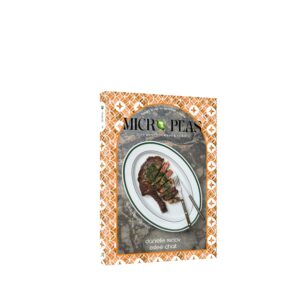
Micro Peas – The Mini Cookbook Series: Quick Cooking Meat (Honest Review)
Introduction
In a world where time is limited and attention spans are shorter than ever, cookbooks are evolving—and Micro Peas – The Mini Cookbook Series: Quick Cooking Meat by Danielle Renov is a perfect example of that shift. This compact cookbook is designed for people who want practical, flavorful meals without flipping through hundreds of pages.
Rather than overwhelming readers with complexity, this book embraces simplicity and focus. It belongs to the “Micro Peas” series, which centers each volume around a specific ingredient or theme, making cooking more approachable and less time-consuming.
This review explores what makes this cookbook unique, who it’s best for, and whether it’s worth adding to your kitchen collection.
Concept and Approach
What immediately sets this cookbook apart is its micro-format philosophy. Instead of offering a broad range of unrelated recipes, it focuses specifically on quick meat-based dishes—primarily centered around boneless cuts.
Each recipe is crafted to be:
- Quick to prepare
- Easy to follow
- Practical for everyday cooking
The idea is simple: eliminate the frustration of searching endlessly for a recipe and instead provide a curated selection of reliable, repeatable meals.
This targeted approach makes the book especially appealing to busy individuals or families who need dependable meal ideas without unnecessary complexity.
Content and Recipe Variety
Despite its small size (around 40–44 pages), the cookbook manages to pack in over 17 recipes.
The recipes cover a diverse range of flavors and styles, including:
- Light dishes like Greek chicken salad
- Comfort meals such as wraps and baked options
- Globally inspired recipes like General Tso-style chicken
This variety ensures that the book doesn’t feel repetitive, even though it focuses on a single protein category.
Another strength is how the recipes balance familiarity with creativity. Some dishes feel like upgraded versions of everyday meals, while others introduce new flavor combinations without becoming intimidating.
Ease of Use
One of the standout features of this cookbook is its user-friendly structure.
- Instructions are clear and concise
- Ingredients are straightforward and accessible
- Recipes are designed for real-life schedules
The author clearly understands her audience—people who don’t want to spend hours in the kitchen. This is reflected in how quickly most recipes can be prepared.
Additionally, the cookbook avoids overcomplicated techniques. Even beginner cooks can confidently follow along without feeling overwhelmed.
Design and Presentation
The physical format of the book is compact, measuring roughly 5.6 × 8 inches, making it easy to handle and store.
Despite its small size, the presentation is visually appealing:
- High-quality food photography
- Clean layout
- Easy-to-read formatting
Each recipe is accompanied by visuals, which adds inspiration and helps users understand what the final dish should look like.
The compact design also makes it practical for kitchen use—you can keep it nearby without taking up much space.
Strengths of the Cookbook
1. Time-Saving Focus
This book excels at helping users cook quickly without sacrificing flavor. Every recipe is designed with efficiency in mind.
2. Clear Theme
By focusing on quick meat recipes, the cookbook avoids confusion and delivers exactly what it promises.
3. Beginner-Friendly
No advanced culinary skills are required, making it ideal for beginners or casual cooks.
4. Practical for Daily Use
Unlike many cookbooks that are used occasionally, this one is built for regular, everyday cooking.
5. Strong Visual Appeal
The inclusion of photos for recipes enhances usability and inspiration.
Potential Drawbacks
1. Limited Number of Recipes
With around 17+ recipes, some users may find the selection too small compared to traditional cookbooks.
2. Narrow Focus
While the specialized theme is a strength, it may not appeal to those looking for a broader range of dishes.
3. Not Ideal for Advanced Chefs
Experienced cooks seeking complex or gourmet techniques might find the recipes too simple.
Who Is This Book For?
This cookbook is best suited for:
- Busy professionals
- Families needing quick dinner ideas
- Beginner cooks
- Fans of practical, no-fuss recipes
It’s particularly useful for anyone who values efficiency and simplicity over culinary experimentation.
Real-World Practicality
One of the most impressive aspects of this cookbook is how well it translates into real-life use.
Many cookbooks look great on paper but are rarely used. This one is different—it’s designed to become part of your routine.
The recipes rely on accessible ingredients and straightforward steps, making them easy to repeat weekly. This practicality is where the book truly shines.
Overall Value
Considering its affordability and focused content, Micro Peas – The Mini Cookbook Series: Quick Cooking Meat offers solid value.
You’re not paying for quantity—you’re paying for curation and usability. Instead of hundreds of recipes you’ll never try, you get a small collection that you’ll actually use.
For many home cooks, that’s a better investment.
Final Verdict
Micro Peas – The Mini Cookbook Series: Quick Cooking Meat succeeds in doing exactly what it promises: simplifying cooking without compromising on flavor.
It’s not a comprehensive culinary encyclopedia—and it doesn’t try to be. Instead, it’s a practical, well-designed tool for everyday meals.
If you’re looking for a compact cookbook that delivers quick, reliable, and delicious meat recipes, this one is a strong choice.
However, if you prefer large cookbooks with extensive variety and advanced techniques, you may find it somewhat limited.
Conclusion
This cookbook represents a modern approach to home cooking—focused, efficient, and realistic. It’s ideal for people who want to spend less time searching for recipes and more time actually cooking and enjoying their meals.