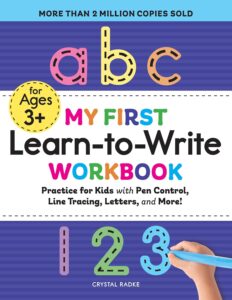
A Detailed Review of My First Learn-to-Write Workbook: Practice for Kids with Pen Control, Line Tracing, Letters, and More!
Early childhood is a crucial stage for developing foundational learning skills, especially those related to communication, reading, and writing. Parents and educators often look for tools that can help young children begin their learning journey in an engaging and structured way. One resource designed specifically for this purpose is My First Learn-to-Write Workbook: Practice for Kids with Pen Control, Line Tracing, Letters, and More! by Crystal Radke.
Part of the My First Preschool Skills Workbooks series, this workbook aims to introduce children between the ages of three and five to early writing concepts through interactive activities. With a strong focus on pen control, tracing, and alphabet recognition, the workbook is designed to help young learners develop the basic skills necessary for future reading and writing success.
Rather than presenting writing as a formal academic task, the book approaches learning through playful exercises and colorful illustrations, making it easier for children to stay engaged while practicing essential motor and cognitive skills.
Building Early Writing Confidence
One of the biggest challenges in early education is helping children feel comfortable with writing tools such as pencils or crayons. Before children can begin forming letters and words, they first need to develop basic control over their hand movements.
My First Learn-to-Write Workbook introduces this concept through simple line-tracing exercises. Children start by tracing straight lines, curved shapes, and basic patterns. These activities gradually strengthen the muscles used for writing and improve hand-eye coordination.
This step-by-step progression is especially helpful for preschoolers who may be holding a pencil for the first time. By practicing simple motions before attempting letters, children can develop confidence in their abilities without feeling overwhelmed.
Over time, these small exercises help create the foundation needed for handwriting development.
A Structured Approach to Learning the Alphabet
After introducing basic pen control, the workbook moves into letter-tracing activities. These pages allow children to practice writing both uppercase and lowercase letters while following clear guides.
The structure of these exercises encourages repetition, which is important for young learners who are still developing memory and motor coordination. By tracing letters multiple times, children gradually become more comfortable recognizing and forming each character.
In addition to tracing letters, the workbook includes activities that connect letters with simple words and images. This helps reinforce early reading comprehension by linking written symbols with familiar objects or concepts.
The result is a learning experience that combines writing practice with early literacy development.
Activities That Encourage Engagement
One of the reasons this workbook has become popular among parents and educators is the variety of activities included throughout its pages. Instead of repeating the same type of exercise over and over, the book introduces different formats that keep children interested.
Some examples of these activities include:
- Line tracing exercises that strengthen fine motor skills
- Connect-the-dots puzzles that improve visual coordination
- Shape tracing activities that build spatial awareness
- Simple letter-writing practice that reinforces alphabet recognition
- Fill-in-the-blank exercises that introduce early reading concepts
These varied activities help maintain children’s curiosity while still reinforcing important skills. The combination of repetition and variety allows young learners to practice regularly without becoming bored.
Colorful Illustrations That Capture Attention
Visual design plays an important role in children’s educational materials. Bright colors and playful illustrations can make learning feel more like a fun activity than a traditional lesson.
The workbook includes numerous pictures and friendly characters that accompany the writing exercises. These images often serve as prompts or cues for the activities on each page.
For example, a tracing exercise may be paired with a simple drawing of an animal or object that begins with the letter being practiced. This connection between pictures and letters helps children associate language with visual experiences.
The slightly whimsical tone of the illustrations adds a sense of playfulness that many young learners enjoy.
Supporting Fine Motor Development
Another key benefit of early writing practice is the development of fine motor skills. These skills involve the small muscles in the hands and fingers that control precise movements.
Activities such as tracing lines, drawing shapes, and forming letters help strengthen these muscles. Improved fine motor control can support many everyday tasks, including drawing, cutting with scissors, and eventually writing full words and sentences.
By practicing these motions regularly, children gradually gain better control over their hand movements. This can make the transition to formal handwriting instruction smoother once they enter kindergarten or early elementary school.
Suitable for Home or Classroom Learning
One of the advantages of My First Learn-to-Write Workbook is its flexibility. The workbook can be used in several different learning environments.
Parents may use it at home as part of a daily learning routine or as an occasional activity during quiet time. Teachers and caregivers may also find it useful as a supplemental resource in preschool or early education classrooms.
Because the activities are short and clearly explained, children can complete individual pages without needing lengthy instructions. This makes it easier for adults to guide learning without requiring extensive preparation.
The workbook format also allows children to revisit pages or practice favorite activities multiple times.
Writing Style and Educational Approach
Crystal Radke presents the material in a simple and accessible way that aligns with the developmental stage of young learners. Instructions are clear and easy to follow, while the activities gradually increase in complexity.
The educational philosophy behind the workbook emphasizes practice, repetition, and encouragement rather than pressure. Children are invited to explore writing through hands-on activities that feel approachable and enjoyable.
This approach helps build positive associations with learning and encourages children to view writing as a creative skill rather than a difficult task.
Who Might Find This Workbook Helpful
This workbook may be particularly useful for:
- Parents introducing early writing skills at home
- Preschool teachers seeking structured handwriting practice
- Caregivers looking for educational activities for children ages 3–5
- Families preparing children for kindergarten readiness
Because the exercises focus on foundational skills, the workbook can also benefit children who need additional practice with pen control or letter recognition.
Final Thoughts
Overall, My First Learn-to-Write Workbook: Practice for Kids with Pen Control, Line Tracing, Letters, and More! provides a structured yet playful introduction to early writing skills. Through tracing exercises, alphabet practice, and engaging activities, Crystal Radke offers young learners an opportunity to build important developmental skills at their own pace.