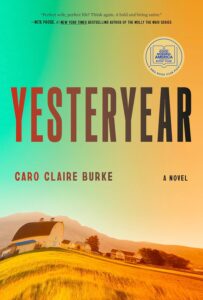
A Detailed Review of Yesteryear
Modern novels that blend satire, social commentary, and speculative storytelling often challenge readers to examine the cultural narratives that shape everyday life. Yesteryear does exactly that. Written by debut author Caro Claire Burke, the book combines elements of time-travel fiction, dark humor, and psychological tension to explore the contrast between idealized lifestyles and historical reality.
At first glance, the story appears to revolve around a familiar social media personality living what seems like a perfect traditional family life. However, the narrative quickly transforms into something far more complex when the protagonist wakes up in the year 1855, where the romanticized version of “traditional living” suddenly becomes a harsh and demanding reality.
Through this unusual premise, the novel raises thought-provoking questions about identity, authenticity, and the cultural expectations surrounding modern portrayals of domestic life.
A Story That Begins in the World of Social Media
The central character of the novel is Natalie Heller Mills, a social media influencer known for promoting a highly curated lifestyle centered on traditional family values. Online, Natalie presents an image of domestic perfection: a charming farmhouse, a loving husband, six cheerful children, and a life filled with wholesome routines.
Her digital persona has attracted millions of followers who admire the aesthetic she shares online—freshly baked bread, handmade crafts, rustic kitchens, and carefully staged photographs that reflect an idealized version of family life.
However, behind the scenes, the reality is more complicated. Much of Natalie’s lifestyle is carefully managed with the help of assistants, nannies, and production teams. The image she presents to the public is polished and controlled, designed to appeal to her large audience.
This contrast between image and reality becomes a key theme throughout the novel.
An Unexpected and Disturbing Shift
One morning, Natalie wakes up expecting to continue her familiar routine of content creation and family life. Instead, she finds herself in a version of her home that feels strangely unfamiliar.
At first, the changes appear subtle. The kitchen lacks modern appliances, and the atmosphere feels colder and less comfortable. As the day progresses, however, Natalie begins to realize that something far more significant has changed.
The year appears to be 1855.
In this new reality, the conveniences that once supported her lifestyle no longer exist. Instead of curated photographs and prepared meals, daily life now involves physically demanding work such as hauling firewood, washing clothes by hand, and managing household tasks without modern tools.
The children she recognizes are now different in behavior and appearance, and her husband—once portrayed online as part of a romanticized lifestyle—has become a hardworking farmer whose daily concerns revolve around survival rather than social media appearances.
This sudden shift forces Natalie to confront a world she has only previously represented through an aesthetic lens.
A Blend of Satire and Speculative Fiction
One of the most distinctive qualities of Yesteryear is its ability to combine social satire with speculative storytelling. The premise of a modern influencer transported into the realities of the nineteenth century creates numerous opportunities for both humor and tension.
Natalie initially attempts to rationalize what has happened. She wonders whether she has become part of an elaborate reality television show, an experimental social project, or some kind of elaborate prank designed to expose her online persona.
The possibility of time travel, while difficult for her to accept, slowly becomes harder to dismiss as the details of her new environment reveal increasing historical authenticity.
Through Natalie’s reactions, the novel explores how modern assumptions about “simpler times” often overlook the physical hardship and social constraints that defined daily life in earlier centuries.
Themes of Authenticity and Performance
A major theme throughout the book involves the concept of performance—both in social media culture and in historical expectations of women’s roles.
Natalie’s online persona represents a carefully constructed performance designed to appeal to her audience. Every image she posts and every story she shares contributes to a narrative that suggests she has mastered the art of traditional living.
When she finds herself in 1855, however, the performance disappears. The physical demands of life during that era leave little room for aesthetic presentation or curated storytelling.
The contrast between these two worlds highlights how modern media often transforms complex realities into simplified narratives.
Through Natalie’s experiences, the novel invites readers to consider how cultural ideals are shaped and how those ideals influence perceptions of history and identity.
Character Development Through Crisis
Natalie begins the story with strong confidence in her identity as an influencer and lifestyle expert. Yet the challenges she faces in her new environment gradually force her to reevaluate her beliefs about independence, resilience, and authenticity.
The daily struggles of nineteenth-century life challenge her assumptions about what it means to maintain a household or support a family.
Physical labor, limited resources, and the absence of modern conveniences create an environment where survival requires practical skills rather than aesthetic presentation.
As Natalie attempts to navigate these challenges, she experiences moments of fear, frustration, and unexpected insight.
This transformation becomes one of the most compelling aspects of the narrative, as readers watch a character accustomed to control and influence adapt to a world where those advantages no longer apply.
Writing Style and Tone
Caro Claire Burke’s writing blends sharp humor with moments of tension and reflection. The narrative voice captures Natalie’s personality effectively, allowing readers to experience both her confidence and her confusion as the story unfolds.
The pacing of the novel moves steadily, balancing moments of satire with scenes that highlight the physical and emotional demands of Natalie’s new reality.
Burke’s descriptions of the nineteenth-century environment create a vivid sense of place while emphasizing the contrast between historical life and modern expectations.
The dialogue and internal monologue often carry a tone of irony, reflecting the protagonist’s struggle to reconcile her online persona with the challenges she now faces.
A Commentary on Modern Culture
Beyond its speculative premise, Yesteryear offers commentary on the broader cultural fascination with nostalgia and idealized visions of the past.
In recent years, certain lifestyle movements have celebrated traditional domestic roles through curated images and social media storytelling. The novel examines this phenomenon by placing a modern influencer directly into the historical setting she once romanticized.
The result is a story that encourages readers to question how cultural narratives are constructed and how they shape public perception.
Rather than presenting simple answers, the novel raises thoughtful questions about authenticity, privilege, and the complex realities behind idealized images.
Who This Book May Appeal To
Yesteryear may particularly appeal to readers who enjoy novels that combine humor with social commentary. Fans of speculative fiction that explores cultural themes may find the premise especially engaging.
Readers interested in stories about identity, media culture, and historical contrasts will likely appreciate the novel’s exploration of how modern ideals interact with historical realities.
Because the narrative blends suspense, satire, and personal transformation, it offers a reading experience that can resonate with a wide range of audiences.
Final Thoughts
Yesteryear delivers a bold and thought-provoking debut that uses an imaginative premise to explore contemporary cultural themes. By placing a modern lifestyle influencer in the demanding environment of the nineteenth century, the novel creates a powerful contrast between image and reality.