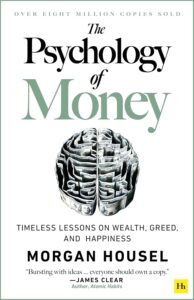
A Practical and Thoughtful Guide to Financial Behavior: A Review of The Psychology of Money
Introduction
The Psychology of Money: Timeless Lessons on Wealth, Greed, and Happiness by Morgan Housel has earned its place as one of the most widely discussed personal finance books in recent years. Rather than focusing on complex formulas or technical investment strategies, this book takes a different approach—one that centers on human behavior, decision-making, and the emotional side of money.
What makes this book stand out is its accessibility. It does not require a background in finance to understand its ideas, yet it still offers meaningful insights for readers at all levels. Through a collection of short, well-crafted stories, Housel explores how people think about money and why those thought patterns often matter more than raw knowledge.
A Unique Perspective on Money
Unlike traditional finance books that emphasize numbers, charts, and market predictions, The Psychology of Money argues that financial success is less about intelligence and more about behavior. This perspective is both refreshing and practical.
Housel highlights that people make financial decisions in real-life contexts—around family discussions, influenced by personal experiences, and shaped by emotions. These decisions are rarely made in controlled, logical environments. By focusing on this reality, the book offers a more relatable and realistic framework for understanding money.
This shift in perspective allows readers to reflect on their own habits rather than simply learning abstract concepts. It encourages awareness of biases, emotional triggers, and long-term thinking.
Structure and Readability
One of the strengths of The Psychology of Money lies in its structure. The book is divided into 19 short chapters, each functioning as a standalone lesson. This format makes it easy to read in segments without losing continuity.
Each chapter introduces a specific idea—such as the importance of patience, the role of luck, or the impact of ego—and supports it with real-world examples and anecdotes. The stories are concise but effective, often leaving a lasting impression without overwhelming the reader.
The writing style is clear, engaging, and conversational. Housel avoids jargon and instead uses simple language to communicate complex ideas. This approach makes the book approachable while still maintaining depth.
Key Themes and Insights
1. Behavior Over Knowledge
A central theme throughout the book is that financial success depends more on behavior than technical skill. Even highly educated individuals can make poor financial decisions if they lack discipline or emotional control. This insight challenges the assumption that more information automatically leads to better outcomes.
2. The Role of Time and Patience
Housel emphasizes the power of long-term thinking, particularly when it comes to investing and saving. The concept of compounding is presented not just as a mathematical principle, but as a mindset that requires patience and consistency.
3. Wealth vs. Richness
Another important distinction made in the book is between being “rich” and being “wealthy.” Richness is often visible—luxury items, high income—while wealth is what is not seen: savings, investments, and financial security. This idea encourages readers to rethink how they define financial success.
4. The Influence of Personal Experience
The book also explores how individual experiences shape financial decisions. People who grew up in different economic conditions may have entirely different attitudes toward risk, saving, and spending. Recognizing these differences can lead to better understanding and decision-making.
5. Managing Risk and Uncertainty
Housel presents risk as an unavoidable part of financial life. Instead of trying to eliminate it entirely, he suggests learning how to manage it thoughtfully. This includes maintaining a margin of safety and preparing for unexpected outcomes.
Real-World Relevance
One of the most valuable aspects of The Psychology of Money is its practicality. The lessons are not tied to specific market conditions or short-term trends, which means they remain relevant over time. Readers can apply these principles regardless of their financial situation or goals.
The book does not promise quick results or guaranteed success. Instead, it offers a framework for making better decisions over the long term. This realistic approach adds credibility and makes the advice more sustainable.
Strengths of the Book
- Accessible Writing Style: Easy to understand, even for beginners.
- Engaging Storytelling: Real-life examples make concepts memorable.
- Timeless Lessons: Focuses on principles that remain relevant over time.
- Balanced Perspective: Avoids extreme or unrealistic financial advice.
These strengths contribute to the book’s broad appeal and lasting popularity.
Considerations
While The Psychology of Money offers valuable insights, it is important to note that it does not provide detailed, step-by-step financial strategies. Readers looking for specific investment techniques or advanced financial planning tools may need to supplement this book with additional resources.
However, this is also part of its strength—it focuses on foundational thinking rather than prescriptive rules, allowing readers to adapt its lessons to their own circumstances.
Who Should Read This Book?
This book is suitable for a wide range of readers, including:
- Beginners seeking a clear introduction to personal finance concepts
- Individuals interested in improving their financial habits
- Readers who prefer practical insights over technical analysis
- Anyone looking to better understand the emotional side of money
Its broad applicability makes it a useful addition to almost any reading list.
Final Thoughts
The Psychology of Money by Morgan Housel offers a thoughtful and insightful look at how people interact with money. By focusing on behavior, emotions, and long-term thinking, it provides a perspective that is both practical and enduring.