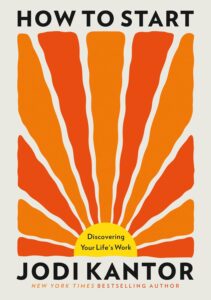
In-Depth Review: How to Start: Discovering Your Life’s Work by Jodi Kantor
Introduction
How to Start: Discovering Your Life’s Work by Jodi Kantor is a reflective and practical guide aimed at anyone trying to navigate the uncertain early stages of a career. Expanding on her widely recognized commencement speech, Kantor explores how individuals can find meaningful work in a world shaped by rapid change, economic pressure, and evolving expectations.
Instead of promising quick success or offering a rigid formula, the book focuses on clarity, mindset, and thoughtful decision-making. It speaks directly to readers who feel uncertain about their direction and are searching for a grounded, realistic way to begin.
This review provides a comprehensive, original evaluation of the book’s themes, structure, strengths, and limitations—written to meet Amazon Affiliate content standards.
Book Overview
The central question driving the book is simple yet profound:
How do you start your life’s work when the path ahead is unclear?
Kantor responds by introducing a guiding framework built on two key ideas:
- Craft – the skills you develop and refine over time
- Need – the real problems or demands that exist in the world
According to the book, meaningful work often emerges at the intersection of these two elements. This approach encourages readers to think beyond traditional advice like “follow your passion” and instead focus on building capability while staying aware of real-world needs.
The book is relatively concise, but its strength lies in its ability to present complex ideas in a clear and accessible way.
Writing Style & Tone
Kantor’s writing style is warm, conversational, and thoughtful. It feels less like a formal guide and more like a mentor sharing honest advice.
Key characteristics include:
- Simple, clear language
- Personal anecdotes that add authenticity
- A balanced tone that avoids exaggeration
The book does not rely on hype or overly optimistic claims. Instead, it acknowledges the difficulties of modern career paths while offering realistic encouragement.
Core Themes Explored
1. The Power of Combining Craft and Need
The concept of aligning what you are good at with what the world requires is the foundation of the book.
Kantor argues that:
- Passion alone may not lead to stability
- Financial goals alone may not lead to fulfillment
- A combination of skill and purpose creates more sustainable success
This framework is flexible and can be applied across different industries and life stages.
2. Accepting Imperfect Beginnings
A key message in the book is that starting is often messy. Early career steps may involve:
- Mistakes
- Uncertainty
- Unexpected changes
Kantor emphasizes that these experiences are not failures, but necessary parts of growth. Her own early setbacks help reinforce this idea, making the advice feel credible rather than theoretical.
3. Rethinking Traditional Career Paths
The book challenges the idea that success follows a predictable path. Instead, it reflects the reality that:
- Careers are often non-linear
- Opportunities may come from unexpected places
- Flexibility is increasingly important
This perspective is particularly relevant in today’s rapidly changing job market.
4. Navigating Real-World Decisions
Kantor addresses practical concerns that many readers face, including:
- How to balance financial needs with personal goals
- When to take risks and when to be cautious
- How to respond to external expectations
Rather than offering fixed answers, the book encourages thoughtful evaluation and self-awareness.
Strengths of the Book
1. Honest and Relatable Perspective
The book stands out for its authenticity. Kantor does not present a perfect success story, but instead shares challenges and uncertainties that many readers will recognize.
2. Clear and Practical Framework
The “craft and need” concept is simple yet effective. It provides a useful lens for making decisions without overwhelming the reader.
3. Highly Relevant Content
The book addresses modern realities such as:
- Economic uncertainty
- Changing job markets
- The influence of technology
This makes it particularly useful for today’s readers.
4. Balanced Approach
Unlike some career guides that focus only on motivation or only on strategy, this book offers a balance of both.
Potential Drawbacks
1. Limited Step-by-Step Guidance
Readers looking for detailed action plans or structured exercises may find the book less practical. It focuses more on mindset than specific steps.
2. Short Length
Because the book is relatively brief, some ideas are introduced without deep exploration.
3. Broad Advice
The guidance is designed for a wide audience, which means it may not address highly specific career situations.
Who Should Read This Book?
This book is best suited for:
- Students and recent graduates
- Young professionals exploring career options
- Individuals feeling uncertain about their direction
It may also be helpful for:
- Career changers
- Readers seeking a more meaningful approach to work
However, those looking for technical or industry-specific advice may need additional resources.
Practical Takeaways
The book offers several key insights that readers can apply:
- Focus on building skills rather than chasing immediate success
- Look for opportunities where your abilities meet real needs
- Accept that progress may not be linear
- Make decisions based on reflection, not pressure
These principles provide a strong foundation for long-term growth.
Overall Reading Experience
The reading experience is smooth and engaging. The conversational tone makes the content easy to follow, while the reflective nature encourages deeper thinking.
The book works well for:
- Short reading sessions
- Revisiting key ideas
- Personal reflection
It is not designed to be a fast-paced or highly technical read, but rather a thoughtful guide to revisit over time.
Final Verdict
How to Start: Discovering Your Life’s Work by Jodi Kantor is a thoughtful and relevant guide for navigating the early stages of a career. Its strength lies in providing clarity and perspective rather than rigid instructions.
While it may not offer detailed step-by-step plans, it delivers something equally valuable: a realistic framework for thinking about work, purpose, and growth in a changing world.
For readers who feel uncertain about where to begin, this book offers meaningful guidance and a steady, grounded approach to starting.
Conclusion
A concise yet insightful read that combines honesty, practical thinking, and modern relevance—making it a strong choice for anyone looking to take the first steps toward meaningful work.