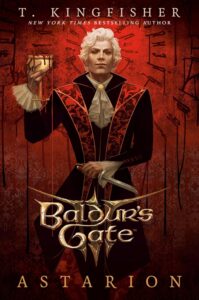
In-Depth Review: Baldur’s Gate 3: Astarion by T. Kingfisher
Introduction
Baldur’s Gate 3: Astarion by T. Kingfisher is a character-driven fantasy novel set within the rich universe of the acclaimed Baldur’s Gate 3. Centered on one of the game’s most memorable companions, Astarion Ancunin, the book explores his life beyond the player’s choices, diving deeper into his past, motivations, and struggle for autonomy.
Rather than simply retelling events from the game, this novel expands the lore and emotional complexity surrounding Astarion, presenting a darker and more introspective narrative. It blends gothic fantasy elements with themes of survival, identity, and moral ambiguity, creating a story that appeals to both fans of the game and readers new to the setting.
This review offers a detailed, original evaluation of the book’s narrative structure, writing style, themes, and overall reading experience.
Story Overview (No Spoilers)
The novel follows Astarion, a vampire spawn bound to the cruel will of his master, Cazador Szarr. Once a magistrate with a respectable life, Astarion is now trapped in a cycle of servitude, forced to carry out tasks that conflict with his sense of self.
The story is driven by his desire for freedom. When an opportunity arises through a dangerous and morally questionable competition orchestrated by his master, Astarion sees a chance to break free. To succeed, he forms an uneasy alliance with an Aasimar paladin, Hahn den Suriel—an individual whose values sharply contrast with Astarion’s survival-driven instincts.
As the narrative unfolds, the partnership becomes central to both the plot and the emotional development of the characters. The journey takes them through the shadows of Baldur’s Gate, revealing hidden dangers and forcing difficult choices.
Writing Style & Tone
T. Kingfisher’s writing style is rich, atmospheric, and character-focused. The prose leans into a darker tone, reflecting the grim nature of Astarion’s circumstances.
Key elements of the writing include:
- Vivid descriptions that create a strong sense of place
- Sharp, often ironic internal dialogue from Astarion
- A balance between dark humor and emotional weight
The tone is consistent with gothic fantasy traditions, emphasizing tension, moral complexity, and psychological depth.
Character Development
Astarion
Astarion is the clear centerpiece of the novel. His characterization is layered and nuanced, capturing the conflict between:
- His desire for freedom
- His survival instincts
- The lingering effects of his past
The book explores his internal struggles in greater detail than the game, offering insight into:
- His fears and vulnerabilities
- His coping mechanisms
- His evolving sense of identity
Rather than portraying him as purely heroic or villainous, the story embraces his moral ambiguity.
Hahn den Suriel
Hahn serves as both a narrative foil and a catalyst for Astarion’s development. As a paladin, he represents ideals such as honor, duty, and compassion—qualities that challenge Astarion’s worldview.
Their interaction creates:
- Tension between opposing values
- Opportunities for character growth
- A dynamic partnership that evolves over time
World-Building
The setting of Baldur’s Gate is brought to life through detailed descriptions and immersive storytelling. The city is portrayed as:
- Dark and unpredictable
- Filled with hidden dangers
- Influenced by power struggles and secrets
The novel expands on the lore of the Baldur’s Gate 3 universe, providing additional context for readers while remaining accessible to newcomers.
Themes Explored
1. Freedom vs. Control
A central theme is Astarion’s struggle to reclaim control over his life. The story examines what freedom truly means for someone who has been deprived of it for so long.
2. Identity and Transformation
Astarion’s journey is also about understanding who he is beyond his circumstances. The book explores how identity can be shaped—and reshaped—by experience.
3. Moral Ambiguity
The narrative avoids clear distinctions between right and wrong. Characters are forced to make difficult choices, often with no ideal outcome.
4. Trust and Connection
The relationship between Astarion and Hahn highlights the challenges of trust, especially for someone who has been betrayed and controlled.
Strengths of the Book
1. Deep Character Exploration
The novel excels in providing a detailed and emotionally engaging portrayal of Astarion, making him more than just a supporting character.
2. Atmospheric Writing
The dark, immersive tone enhances the reading experience and aligns well with the story’s themes.
3. Strong Character Dynamics
The interaction between Astarion and Hahn adds depth and complexity to the narrative.
4. Expansion of Existing Lore
Fans of Baldur’s Gate 3 will appreciate the additional context and storytelling.
Potential Drawbacks
1. Slower Pacing in Some Sections
The focus on character development and internal conflict may slow the narrative for readers expecting constant action.
2. Dark Themes
The tone and subject matter may not appeal to readers who prefer lighter fantasy stories.
3. Familiarity with the Universe Helps
While accessible, readers unfamiliar with the game may miss some references or context.
Who Should Read This Book?
This novel is ideal for:
- Fans of the Baldur’s Gate 3
- Readers who enjoy character-driven fantasy
- Those interested in darker, more introspective stories
It may be less suitable for readers looking for fast-paced, action-heavy narratives.
Overall Reading Experience
The book offers a thoughtful and immersive reading experience. Its strength lies in its ability to balance:
- Emotional depth
- World-building
- Character interaction
The pacing encourages readers to engage with the characters’ internal journeys rather than rushing through the plot.
Final Verdict
Baldur’s Gate 3: Astarion by T. Kingfisher is a compelling and character-focused addition to the Baldur’s Gate universe. It succeeds in expanding Astarion’s story while delivering a narrative that stands on its own.
While its darker tone and slower pacing may not appeal to every reader, it offers significant value for those interested in complex characters and immersive storytelling.