A Modern Guide to Understanding America’s Founding Framework
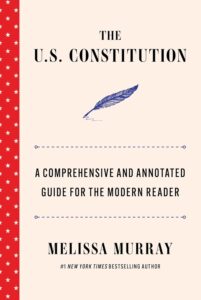
Review of The U.S. Constitution: A Comprehensive and Annotated Guide for the Modern Reader
Introduction
The U.S. Constitution: A Comprehensive and Annotated Guide for the Modern Reader is designed to make one of the most important legal documents in history accessible to a broad audience. Written by Melissa Murray—a respected law professor and cohost of the podcast Strict Scrutiny—this book seeks to bridge the gap between complex constitutional law and everyday understanding.
Rather than presenting the Constitution as a distant, abstract text, Murray reframes it as a living document that continues to shape modern society. Through annotations, historical context, and real-world examples, the book offers readers a structured and approachable way to engage with the United States Constitution.
Concept and Purpose
The primary goal of this book is clarity. Many people recognize the importance of the Constitution but find it difficult to interpret due to its legal language and historical distance. This guide addresses that challenge by breaking down each section and amendment into understandable explanations.
Murray’s approach is both educational and practical. She doesn’t simply explain what the Constitution says—she explores why it matters today. By connecting historical intent with modern interpretation, the book helps readers see the document as relevant and dynamic rather than static.
This dual focus makes the book particularly valuable for those who want to understand how constitutional principles influence current events, legal decisions, and societal debates.
Structure and Organization
The book is carefully structured to guide readers through the Constitution in a logical and digestible way. Each amendment and major section is presented alongside annotations that provide:
- Historical background
- Explanation of key terms and concepts
- Examples of how the provision is applied in modern contexts
This format allows readers to move at their own pace. They can read the book sequentially or focus on specific amendments of interest.
The annotations are concise yet informative, striking a balance between depth and accessibility. This makes the book suitable for both beginners and readers with some prior knowledge of constitutional law.
Writing Style and Accessibility
One of the most notable strengths of this book is its writing style. Melissa Murray has a talent for explaining complex ideas in a clear and engaging way. Her tone is conversational without being overly casual, making the material approachable while maintaining credibility.
Legal jargon is minimized, and when technical terms are introduced, they are explained in context. This ensures that readers are not overwhelmed, even when dealing with intricate legal concepts.
The inclusion of real-world examples further enhances understanding. By showing how constitutional principles apply to contemporary issues, the book makes abstract ideas more tangible.
Relevance to Modern Readers
A key feature of this guide is its emphasis on modern relevance. The Constitution is often discussed in historical terms, but Murray highlights its ongoing impact on current legal and political landscapes.
The book explores how interpretations of the Constitution evolve over time, particularly through decisions made by institutions like the Supreme Court of the United States. This perspective helps readers understand that the meaning of the Constitution is not fixed but shaped by context and interpretation.
By connecting past and present, the book encourages readers to think critically about how foundational principles apply in today’s world.
Educational Value
This book serves as an excellent educational resource. It is particularly useful for:
- Students studying history, law, or political science
- General readers interested in civic knowledge
- Individuals seeking a clearer understanding of constitutional rights
The annotated format makes it a practical reference tool as well as a continuous read. Readers can revisit specific sections whenever they need clarification on a particular topic.
Strengths of the Book
Clear and Accessible Explanations
The book successfully simplifies complex legal concepts without oversimplifying them, making it approachable for a wide audience.
Strong Connection to Modern Issues
By linking constitutional principles to contemporary examples, the book remains relevant and engaging.
Thoughtful Organization
The structured format allows for both sequential reading and targeted exploration of specific topics.
Authoritative Perspective
Melissa Murray’s background as a legal scholar adds credibility and depth to the analysis.
Potential Considerations
Focus on Interpretation
As with any annotated guide, the explanations reflect the author’s perspective. Readers may benefit from consulting additional sources for a broader range of interpretations.
Not a Substitute for Legal Texts
While highly informative, the book is designed as a guide rather than a comprehensive legal reference. Those seeking in-depth legal analysis may need supplementary materials.
Who Is This Book For?
The U.S. Constitution: A Comprehensive and Annotated Guide for the Modern Reader is ideal for:
- Readers new to constitutional law
- Students looking for an accessible study companion
- Anyone interested in understanding their rights and civic responsibilities
- Individuals who want to connect historical principles with modern issues
It is particularly well-suited for those who appreciate clear explanations and practical insights.
Overall Reading Experience
Reading this book feels like having a knowledgeable guide walk you through a complex but important subject. The tone is engaging, and the structure keeps the material manageable.
The combination of historical context and modern application creates a well-rounded perspective. Readers are not only informed but also encouraged to think critically about the role of the Constitution in their own lives.
Final Verdict
The U.S. Constitution: A Comprehensive and Annotated Guide for the Modern Reader stands out as a practical and insightful resource for understanding one of the most influential documents in history. Its accessible style, thoughtful organization, and emphasis on real-world relevance make it a valuable addition to any reader’s library.
View on Amazon