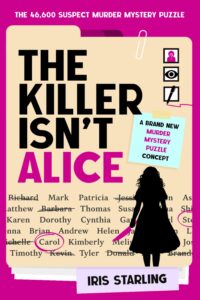
A Puzzle Like No Other: A Review of The Killer Isn’t Alice: The 46,600 Suspect Murder Mystery Puzzle
Introduction
The Killer Isn’t Alice: The 46,600 Suspect Murder Mystery Puzzle by Iris Starling is not a traditional book—it is an interactive challenge that redefines what a mystery experience can be. Rather than presenting a story to follow, this product invites the reader to become the investigator, transforming passive reading into active problem-solving.
With its bold premise—tens of thousands of suspects, a limited set of clues, and a single correct answer—the book positions itself as both a logic puzzle and a mystery game. It appeals to readers who enjoy analytical thinking, pattern recognition, and the satisfaction of solving complex problems.
A Concept That Breaks the Mold
Unlike conventional mystery novels that guide readers through a narrative filled with twists and character development, The Killer Isn’t Alice removes storytelling as the primary focus. Instead, it centers entirely on deduction.
The premise is simple but ambitious: a missing woman, a crime scene, and a massive list of 46,600 potential suspects. The challenge lies in using 18 carefully designed clues to eliminate the innocent and identify the one individual who fits all conditions.
This approach creates a unique experience that feels closer to a logic puzzle or investigative exercise than a traditional book. It is a format that may surprise readers expecting a narrative, but it delivers a distinct and engaging alternative.
The Core Experience: Logic and Deduction
At the heart of the book is its emphasis on reasoning. Each clue is structured to narrow down the pool of suspects, requiring careful analysis and methodical thinking.
The process involves:
- Interpreting each clue accurately
- Cross-referencing information
- Eliminating large groups of names based on specific criteria
- Gradually refining the list until only one candidate remains
This systematic approach makes the experience both challenging and rewarding. It encourages patience and attention to detail, as even small errors in interpretation can lead to incorrect conclusions.
The absence of narrative distractions means that every element serves a purpose. There are no misleading plot devices or unnecessary complications—only the logic of the puzzle itself.
Accessibility and Learning Curve
One of the strengths of The Killer Isn’t Alice is its accessibility. While the scale of the puzzle may initially seem overwhelming, the structure is designed to guide users through the process step by step.
The instructions are clear, and the objective is straightforward. Even those new to logic puzzles can engage with the material, although it may take time to fully grasp the methodology.
For experienced puzzle enthusiasts, the book offers a satisfying level of complexity. The large dataset and precise clues create a challenge that requires both strategic thinking and persistence.
A New Kind of Engagement
This book stands out because it transforms the reader into an active participant. Instead of following a detective’s journey, readers take on that role themselves.
This level of engagement can be particularly appealing for those who enjoy:
- Brain teasers and logic puzzles
- Problem-solving activities
- Interactive games
- Analytical challenges
The experience is immersive in a different way than traditional storytelling. It demands focus and involvement, making it more than just a casual read.
Design and Presentation
The presentation of the book is functional and purpose-driven. The layout prioritizes clarity, ensuring that the large volume of information remains manageable.
The list of suspects, while extensive, is organized in a way that supports the elimination process. The clues are presented clearly, allowing readers to reference them easily as they work through the puzzle.
This practical design enhances usability, which is essential for a product of this nature. Without a clear structure, the scale of the challenge could become overwhelming, but the book manages to maintain order and readability.
Strengths of the Puzzle
- Innovative Concept: Offers a fresh approach to the mystery genre.
- High Engagement: Encourages active participation and critical thinking.
- Scalable Challenge: Suitable for both beginners and experienced puzzle solvers.
- Clear Objective: The goal is well-defined and easy to understand.
These strengths contribute to a unique experience that stands apart from traditional books.
Considerations
While The Killer Isn’t Alice is highly engaging, it is important to recognize that it may not appeal to everyone. Readers seeking a narrative-driven experience with characters and plot development may find the format less satisfying.
The scale of the puzzle can also be demanding. It requires time, patience, and concentration, which may not suit those looking for a quick or casual activity.
Additionally, the lack of storytelling means that the emotional and thematic elements typically found in mystery novels are absent. The focus is entirely on logic and deduction.
Who This Book Is For
This product is best suited for:
- Fans of logic puzzles and brain teasers
- Readers who enjoy interactive and hands-on experiences
- Individuals looking for a challenging mental exercise
- Those interested in unconventional formats within the mystery genre
It is particularly appealing to readers who prefer solving problems over following narratives.
A Unique Gift Idea
Given its distinctive format, The Killer Isn’t Alice also works well as a gift. It offers something different from standard books, making it a thoughtful option for puzzle enthusiasts or anyone who enjoys intellectual challenges.
Its replay value lies in the process rather than the outcome. The satisfaction comes from working through the clues and arriving at the solution independently.
Final Thoughts
The Killer Isn’t Alice: The 46,600 Suspect Murder Mystery Puzzle by Iris Starling is a bold and innovative entry into the world of interactive entertainment. By removing traditional storytelling elements and focusing entirely on logic, it creates an experience that is both challenging and rewarding.