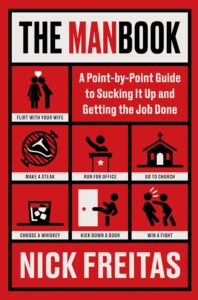
A Practical Review of The Manbook
Self-improvement books often fall into two broad categories: those that focus on abstract philosophy and those that emphasize actionable advice. The Manbook, written by Nick Freitas, clearly belongs to the latter. It presents itself as a straightforward, experience-driven guide aimed at helping men navigate the challenges of responsibility, relationships, and personal growth.
Rather than offering a single overarching theory, the book is structured as a collection of practical lessons drawn from the author’s life experiences in the military, family life, business, and public service. The result is a guide that emphasizes discipline, accountability, and self-reliance, while also encouraging reflection on what it means to develop character over time.
A Concept Rooted in Personal Experience
One of the defining aspects of The Manbook is its foundation in lived experience. Freitas draws on his background as a Green Beret, husband, father, and legislator to frame the lessons presented throughout the book.
These experiences provide context for the advice he offers. Whether discussing leadership, conflict resolution, or personal discipline, the insights are often tied to real-life situations rather than theoretical models.
This approach gives the book a grounded tone. Instead of presenting idealized scenarios, it acknowledges that personal growth often involves mistakes, setbacks, and ongoing effort.
Freitas repeatedly emphasizes that becoming a better man is not a fixed destination but a continuous process.
A Structured, Point-by-Point Format
The book’s format is one of its most distinctive features. Rather than unfolding as a continuous narrative, it is organized into short, focused sections, each addressing a specific skill or life lesson.
Topics range widely, covering both practical tasks and interpersonal dynamics. For example, readers will encounter advice on handling disagreements, planning meaningful experiences in relationships, and approaching everyday responsibilities with greater intention.
This structure makes the book accessible and easy to navigate. Readers can engage with individual sections independently, making it suitable for those who prefer to absorb information in smaller, focused segments.
The format also reinforces the idea that personal development is built through incremental improvements rather than sweeping transformations.
Themes of Responsibility and Accountability
A central theme throughout The Manbook is the importance of personal responsibility. Freitas encourages readers to take ownership of their actions, decisions, and circumstances.
This perspective is reflected in discussions about work ethic, relationships, and personal conduct. The book suggests that consistent effort and accountability are key factors in building trust and achieving long-term goals.
Rather than attributing challenges to external factors, Freitas emphasizes the role of individual choices. This approach aligns with a broader philosophy of self-reliance and personal discipline.
While some readers may find this perspective motivating, others may interpret it differently depending on their own experiences and viewpoints.
Balancing Strength and Character
Another important idea in the book is the balance between strength and integrity. Freitas argues that qualities such as resilience, determination, and confidence should be paired with honesty, fairness, and respect.
This dual focus appears in sections discussing conflict resolution, leadership, and relationships. For example, the book highlights the importance of handling disagreements in a way that maintains dignity and fairness.
Similarly, when addressing personal relationships, the emphasis is not only on initiative but also on empathy and consideration.
By combining these elements, the book attempts to present a holistic view of personal development that goes beyond physical or professional success.
Practical Skills and Everyday Situations
In addition to broader themes, The Manbook includes guidance on a variety of everyday skills. These range from simple tasks, such as preparing a meal, to more complex topics like managing interpersonal conflict.
The inclusion of these practical elements reflects the book’s focus on actionable knowledge. Rather than remaining purely conceptual, it encourages readers to apply lessons in tangible ways.
This emphasis on practicality may appeal to readers who prefer concrete examples and step-by-step advice over abstract discussion.
At the same time, the diversity of topics means that not every section will resonate equally with every reader.
Writing Style and Tone
Freitas’s writing style is direct and conversational. The tone often reflects a sense of straightforwardness, with an emphasis on clarity rather than complexity.
Humor is occasionally used to lighten the discussion, particularly when addressing common challenges or mistakes. This approach helps make the content more approachable and relatable.
The language remains accessible throughout, avoiding overly technical or academic terminology. This makes the book suitable for a wide audience, including readers who may be new to self-improvement literature.
Perspectives on Modern Challenges
The Manbook also engages with contemporary discussions about identity, responsibility, and personal development.
Freitas presents his perspective on what he sees as important qualities for navigating modern life, particularly in areas such as relationships, career development, and personal conduct.
These viewpoints reflect his personal experiences and values, which may resonate differently depending on the reader’s background and beliefs.
The book does not aim to present a universally agreed-upon framework but rather offers one perspective on how individuals can approach self-improvement.
Strengths of the Book
One of the key strengths of The Manbook is its emphasis on practicality. The point-by-point format allows readers to quickly identify topics of interest and apply the advice in real-life situations.
The combination of personal anecdotes and actionable guidance adds authenticity to the content. Readers can see how the lessons were shaped by real experiences rather than abstract theory.
Additionally, the focus on both personal responsibility and ethical behavior provides a balanced approach to self-improvement.
Considerations for Readers
As with many self-improvement books, the effectiveness of the advice depends on how readers interpret and apply it.
Some readers may appreciate the direct, no-nonsense approach, while others may prefer a more nuanced or flexible perspective.
The book’s focus on a specific vision of personal development means that it may resonate more strongly with certain audiences than others.
Approaching the content with an open mind can help readers extract insights that are most relevant to their own situations.
Who This Book May Appeal To
The Manbook may appeal to readers interested in practical self-improvement guides that emphasize discipline, responsibility, and everyday skills.
Individuals looking for concise, actionable advice may find the structure particularly useful.
The book may also resonate with readers who appreciate learning from personal experiences and real-world examples rather than theoretical frameworks.
Final Thoughts
The Manbook offers a structured and practical approach to personal development, grounded in the experiences of Nick Freitas. Through a series of focused lessons, it explores themes of responsibility, resilience, and character.