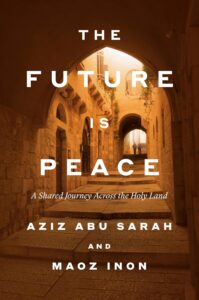
A Reflective Review of The Future Is Peace: A Shared Journey Across the Holy Land
Books about conflict often focus on political strategy, historical disputes, or the narratives of victory and loss. Yet some works approach these subjects from a deeply human perspective, exploring how individuals affected by conflict attempt to build understanding and reconciliation. The Future Is Peace: A Shared Journey Across the Holy Land offers such a perspective. Written by peace activists Aziz Abu Sarah and Maoz Inon, the book tells the story of two men who come from communities long divided by history yet choose to work together toward dialogue and mutual understanding.
Rather than presenting a conventional political analysis, the book combines memoir, travel narrative, and reflections on reconciliation. The authors guide readers through personal stories, cultural landscapes, and historical reflections as they explore the complex realities of life in the region often referred to as the Holy Land.
Through their journey, the book attempts to show how human relationships can transcend inherited divisions and how individuals can contribute to conversations about coexistence.
Two Lives Shaped by Conflict
The narrative begins with the backgrounds of the two authors. Both men grew up in communities deeply affected by decades of conflict between Israelis and Palestinians. Their early experiences were shaped by the tension, fear, and grief that accompany prolonged political struggles.
For Aziz Abu Sarah, growing up in a Palestinian environment meant witnessing the daily realities of occupation, political uncertainty, and personal loss. His life experiences influenced his interest in finding ways to communicate across cultural and political boundaries.
Similarly, Maoz Inon grew up within the Israeli context, where concerns about security and national identity shape everyday life. His personal experiences with conflict also influenced his later commitment to peace activism.
Although their backgrounds differ, both men share the painful experience of losing family members to the violence surrounding the conflict. This shared loss becomes an important foundation for their partnership.
Choosing Dialogue Over Division
One of the most striking aspects of the book is the friendship that develops between the two authors. In regions marked by longstanding political and cultural divisions, such relationships are often seen as unlikely.
Yet the authors explain how dialogue and mutual curiosity allowed them to look beyond stereotypes and inherited narratives. Instead of seeing each other solely as representatives of opposing communities, they began to recognize the common humanity underlying their experiences.
The book emphasizes that their partnership did not erase their differences. Both men acknowledge the complex histories and grievances that shape the conflict. However, they argue that recognizing those realities does not prevent individuals from working toward understanding.
Their collaboration illustrates how personal relationships can become powerful tools for bridging divides.
A Journey Through the Holy Land
A major portion of The Future Is Peace is structured as a weeklong journey across the region known historically as the Holy Land. During this journey, the authors revisit locations that hold cultural, historical, and emotional significance for both Israelis and Palestinians.
Through visits to cities, historical sites, and communities, they explore how the same landscape can carry different meanings for different people.
These travel experiences serve as opportunities for reflection. The authors discuss the myths, historical narratives, and political interpretations that shape how individuals understand the land they inhabit.
By presenting multiple perspectives on these locations, the book encourages readers to consider how narratives about history influence contemporary attitudes.
The Power of Storytelling
Throughout the book, storytelling plays an important role in building empathy. The authors share personal memories, encounters with community members, and conversations with individuals from different backgrounds.
These stories highlight how people living in the same geographic region can experience dramatically different realities.
Rather than presenting a single authoritative narrative, the book acknowledges the existence of competing perspectives. The authors argue that listening to each other’s stories is an essential step toward building mutual understanding.
This emphasis on storytelling reinforces one of the central messages of the book: peace requires the willingness to hear experiences that may challenge one’s own assumptions.
Hope as an Active Choice
Another important theme in the book is the idea that hope is not simply something individuals discover—it is something they actively create.
In communities shaped by conflict, feelings of frustration and despair can easily become dominant. The authors acknowledge these emotions while suggesting that meaningful change requires individuals to take deliberate steps toward dialogue and cooperation.
They emphasize that choosing hope does not mean ignoring injustice or pain. Instead, it involves recognizing that cycles of retaliation rarely produce lasting solutions.
Through their own partnership, the authors attempt to demonstrate that cooperation between individuals from opposing sides of a conflict is possible.
Cultural and Historical Reflections
Beyond personal stories, The Future Is Peace also reflects on the broader cultural and historical factors that shape the region.
The Holy Land holds deep significance for multiple religious and cultural traditions. For centuries, it has been associated with spiritual history, pilgrimage, and sacred narratives.
At the same time, modern political conflicts have added layers of complexity to the region’s identity.
The authors discuss how historical memory, religious symbolism, and national identity intersect within the landscape. By exploring these elements, they attempt to provide readers with a richer understanding of the cultural context surrounding the conflict.
Writing Style and Narrative Approach
The writing style of the book combines personal memoir with reflective commentary. Both authors contribute perspectives that help illuminate their shared journey while preserving their individual voices.
The narrative alternates between descriptions of specific locations, conversations with individuals, and reflections on broader themes related to reconciliation.
This structure allows readers to experience the journey alongside the authors, gradually building a sense of connection to both the places and the people they encounter.
The tone remains thoughtful and sincere, emphasizing dialogue rather than confrontation.
Lessons About Reconciliation
Although the book focuses on a specific geopolitical context, many of its lessons have broader relevance. The authors suggest that reconciliation requires patience, empathy, and the willingness to question inherited assumptions.
They argue that individuals can contribute to peace-building efforts not only through political action but also through everyday interactions that encourage understanding.
By highlighting examples of cooperation between individuals from different backgrounds, the book invites readers to consider how similar principles might apply in other areas of conflict around the world.
Who This Book May Appeal To
The Future Is Peace may appeal to readers interested in memoirs that explore themes of reconciliation, cultural understanding, and personal transformation.
Those who enjoy travel narratives that combine historical reflection with personal storytelling may find the book particularly engaging.
It may also interest readers seeking perspectives on peace-building efforts and the role individuals can play in promoting dialogue across cultural divides.
Because the narrative emphasizes human experiences rather than purely political analysis, the book remains accessible to readers who may not have extensive background knowledge of the region’s history.
Final Thoughts
The Future Is Peace: A Shared Journey Across the Holy Land presents a powerful exploration of friendship, resilience, and the possibility of reconciliation in a region often defined by conflict.